
When and How to Rescreen Your Lanai: A South Shore Florida Homeowner's Guide
July 27, 2026
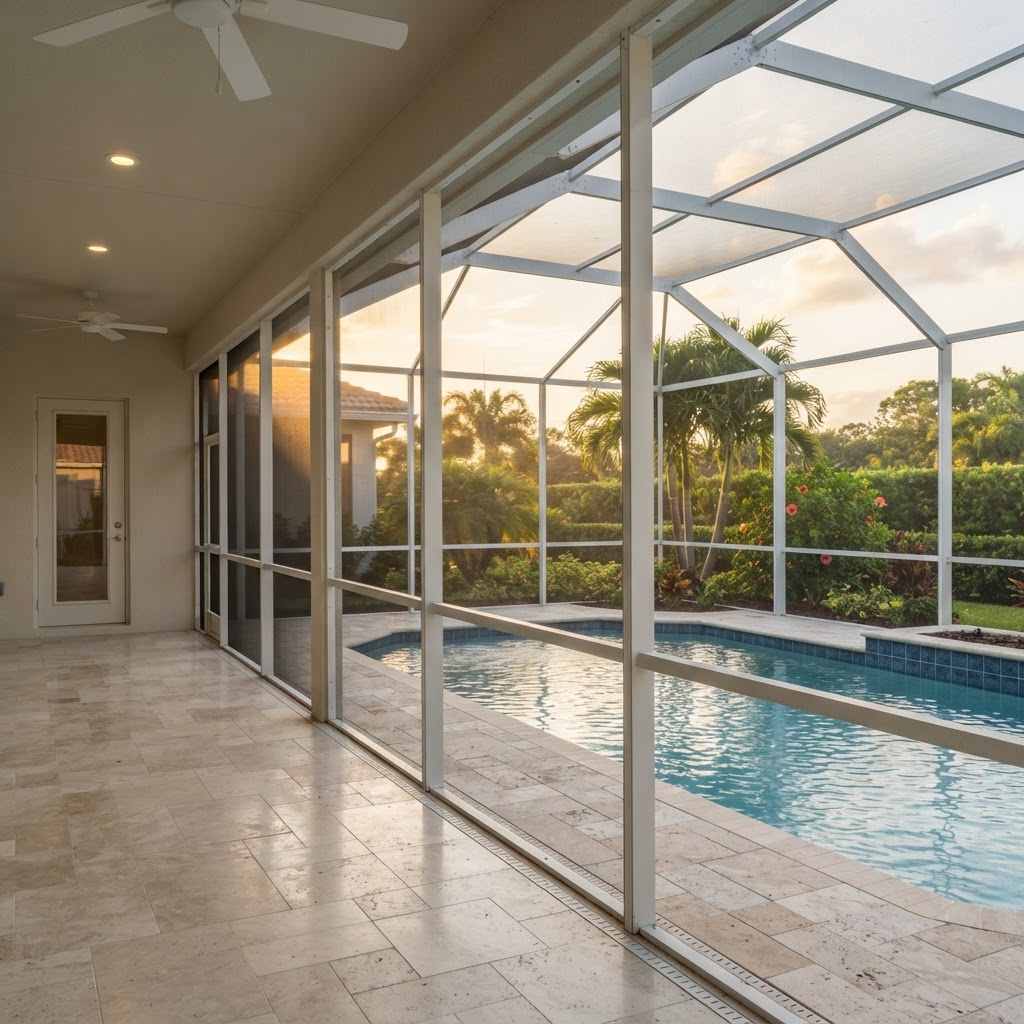
Your lanai is where South Shore Florida living happens — morning coffee, evening gatherings, weekend barbecues, all without the mosquitoes, no-see-ums, and afternoon sun that define a Tampa Bay summer. But the screen mesh that makes that possible doesn't last forever. Florida's relentless UV, humidity, salt air, and storm season break down screen fibers year after year until sagging, holes, and brittleness compromise the comfort and value of your enclosure.
At Southern Legacy Co., we've rescreened hundreds of lanais, pool cages, and screen rooms across Ruskin, Apollo Beach, Wimauma, Riverview, Parrish, and Sun City Center. Here's everything you need to know about when to rescreen your lanai, what mesh options are available, what the process looks like, and what it costs in 2026.
SIGNS IT'S TIME TO RESCREEN YOUR LANAI
Screen mesh typically lasts 7 to 12 years in South Shore Florida, depending on sun exposure, salt proximity, and how well the enclosure has been maintained. But you don't need a calendar to know when it's time — your screen will tell you. Here are the signs to watch for:
Visible sagging or loose panels. When screen mesh loses its tension and starts to sag between frame members, the fibers have stretched beyond their useful life. Sagging mesh catches wind differently, flutters noisily, and eventually tears at the spline channel. If your panels are visibly baggy, rescreening is overdue.
Small holes and tears. A single small hole from a falling branch or a pet's claws is a simple patch. But when you're noticing multiple holes, or tears along the spline channel where the mesh meets the frame, the mesh is failing systemically. Patching at that point is like putting a bandage on a leaking pipe — you'll be back next month.
Brittle or dry mesh. Press your fingernail gently against the screen. Healthy mesh has a slight give and resilience. If it feels dry, stiff, or crumbles slightly under pressure, the UV degradation has reached the point where the fibers can no longer hold tension or resist impact. Brittle mesh tears easily in the next windstorm.
Discoloration and fading. Florida sun bleaches screen mesh over time. While fading alone doesn't mean the mesh has failed, significant discoloration usually accompanies structural breakdown — the same UV that faded the color has also weakened the fibers.
Bugs getting in. If you're noticing more mosquitoes, no-see-ums, or gnats inside your lanai despite closed doors and intact-looking screens, you may have microscopic tears or mesh that has stretched enough to widen the gaps. No-see-um mesh is especially prone to this as it ages.
CHOOSING THE RIGHT SCREEN MESH FOR YOUR LANAI
One of the most important decisions in a rescreen project is selecting the right mesh for your needs. Not all screen mesh is created equal, and the right choice depends on your priorities — bug protection, visibility, durability, or pet resistance.
Fiberglass screen (standard 18x14 mesh) is the most common and affordable option. It provides good airflow, decent visibility, and reliable insect protection for 7 to 10 years in South Shore's climate. It's the right choice for budget-conscious homeowners who want a solid, functional rescreen without premium upgrades.
No-see-um mesh (20x20 weave) is engineered for the tiny biting midges that plague coastal Florida, especially in Apollo Beach, Gibsonton, and areas near the bay. The tighter weave blocks insects that standard mesh lets through. The trade-off is slightly reduced airflow and visibility — but if no-see-ums are ruining your evenings, it's worth every penny.
Super screen (or TuffScreen) is a heavier-duty polyester mesh designed for durability and pet resistance. It holds up better against UV, impacts, and clawing pets. If you have dogs or cats that lean against the screen, or if your enclosure takes a beating from storm debris, super screen can extend the life of your rescreen by several years. It costs more upfront but pays off in longevity.
Florida Glass (privacy screen) has a vinyl coating on one side that reduces heat, blocks UV, and provides daytime privacy. It's popular on east- and west-facing panels where afternoon sun makes the lanai uncomfortably hot. The coated side faces outward, and it does reduce airflow and visibility — so most homeowners use it selectively rather than on every panel.
THE RESCREENING PROCESS: WHAT TO EXPECT
A professional lanai rescreen is a methodical process that, when done correctly, restores your enclosure to like-new condition in a single day for most standard pool cages and lanais.
Step 1 — Inspection and assessment. A reputable contractor walks every panel, documents the condition of both the mesh and the aluminum framing, and identifies any structural issues — corroded frame members, loose fasteners, damaged spline channels — that should be addressed during the rescreen. If the framing itself is compromised, rescreening alone won't solve the problem.
Step 2 — Removal of old mesh. The old screen is carefully removed by pulling the spline (the rubber cord that holds the mesh in the frame channel) and lifting the mesh away. This is where DIY rescreens often go wrong — pulling too aggressively can damage the spline channel, and old spline that's baked onto the frame requires patience and the right tools to remove cleanly.
Step 3 — Frame preparation. The spline channels are cleaned and inspected. Any damaged frame members are repaired or replaced. Fasteners are checked and tightened. This step is critical — installing new mesh on a compromised frame is a waste of money.
Step 4 — New mesh installation. The new screen is rolled into the frame channel using a spline roller, starting from one corner and working methodically to maintain even tension. The mesh is stretched taut but not over-tensioned — too loose and it sags, too tight and it tears at the spline. Experienced installers develop a feel for the right tension that comes from hundreds of enclosures.
Step 5 — Trim and finish. Excess mesh is trimmed with a utility knife, the spline is seated flush, and all panels are inspected for uniform tension and clean edges. Door sweeps and weatherstripping are checked and replaced if needed.
Step 6 — Final walkthrough. The contractor walks the enclosure with you, shows you every panel, and confirms the work meets your expectations. Debris is cleaned up and hauled away.
HOW MUCH DOES IT COST TO RESCREEN A LANAI IN SOUTH SHORE FLORIDA?
Pricing varies based on enclosure size, mesh type, frame condition, and accessibility, but here are general ranges for 2026 in the Ruskin, Apollo Beach, and Wimauma area:
Standard fiberglass rescreen: Most average-sized pool cages and lanais (roughly 800 to 1,200 square feet of screen surface) fall in the $1,500 to $3,500 range with standard fiberglass mesh. Smaller screen rooms cost less; large pool cages with high walls cost more.
No-see-um mesh upgrade: Expect a 20 to 35 percent premium over standard fiberglass. For a typical enclosure, that's an additional $400 to $1,000 — worthwhile if biting midges are a problem at your property.
Super screen or pet-resistant mesh: These premium options run 40 to 60 percent above standard mesh. For homeowners with pets or heavy storm exposure, the extended lifespan often justifies the cost.
Florida Glass / privacy panels: Selective installation on sun-facing walls typically adds $200 to $600 depending on the number of panels.
Frame repairs: If corroded or damaged frame members need replacement, that's priced per linear foot and assessed during the inspection.
The best way to get an accurate number is a free on-site estimate. Every enclosure is different, and a contractor who quotes over the phone without seeing the structure is guessing — not estimating.
DIY VS PROFESSIONAL RESCREENING: WHAT YOU SHOULD KNOW
We understand the temptation to buy a roll of screen mesh and a spline roller from the hardware store and tackle it yourself. For a single small panel or a screen door, that's a reasonable weekend project. For a full lanai or pool cage rescreen, we strongly recommend hiring a professional — and here's why.
Tension matters more than you think. Screen mesh that's too loose sags within weeks and collects water during rain. Mesh that's too tight tears at the spline channel during the next windstorm. Professional installers have the experience to hit the right tension consistently across every panel — including the large, high wall panels on pool cages that are impossible to reach safely without the right equipment.
Height and safety. Most pool cages have wall panels 8 to 12 feet high. Working at that height requires ladders or scaffolding, and leaning a ladder against an aluminum frame is dangerous — the frame isn't designed to support lateral weight. Professional crews use the right access equipment and work in pairs for safety.
Spline channel damage. Old spline bonds to the frame channel after years of Florida heat. Removing it without the right technique can gouge or bend the channel, creating gaps that let bugs in even with new mesh. A damaged channel may need to be reworked or the frame member replaced — turning a $50 DIY savings into a $300 frame repair.
Warranty and accountability. A professional rescreen comes with a workmanship warranty. If a panel sags or tears within the warranty period, it's fixed at no cost. A DIY rescreen has no safety net — if something goes wrong, you're paying to fix it twice.
WHEN TO RESCREEN VS REPLACE YOUR ENCLOSURE
Sometimes a rescreen isn't the right answer. If your aluminum framing is corroded, structurally compromised, or no longer meets current Florida Building Code wind load requirements, a full enclosure replacement may be the better investment — especially if you're planning to sell the home or your insurance company has flagged the structure.
Signs that you need more than a rescreen include: visible corrosion or pitting on structural frame members, loose or missing fasteners at the base plates, leaning or racking of the enclosure, storm damage to the superstructure, or an enclosure that predates the 2002 Florida Building Code revision (which significantly increased wind load requirements for screen enclosures in high-velocity hurricane zones).
A reputable contractor will tell you honestly whether a rescreen will serve you or whether you're better off with a replacement. At Southern Legacy Co., we do free enclosure inspections and we'll give you a straight answer — even if that answer is 'you don't need us yet.'
SCHEDULING YOUR LANAI RESCREEN IN SOUTH SHORE FLORIDA
The best time to rescreen your lanai is before the mesh fails completely — not after a storm tears through brittle panels and leaves your pool cage open to bugs and debris. If you've noticed sagging, small holes, or brittle mesh, now is the time to act. A planned rescreen costs less than an emergency one, and you get to choose your mesh, your timing, and your contractor — rather than scrambling after a storm when every screen company in Tampa Bay is booked solid for weeks.
Southern Legacy Co. serves Ruskin, Apollo Beach, Wimauma, Riverview, Parrish, Sun City Center, and the surrounding South Shore Tampa Bay area. We're a family-owned, licensed Florida contractor (CBC1269183) with 15+ years and 500+ projects in South Shore. We pull permits, use premium materials, and stand behind our work with a written warranty.
Call (813) 313-8383 to schedule your free enclosure inspection and rescreen estimate. We'll walk every panel, document what we find, and give you an honest assessment and a clear, written quote — usually within one business day.