How to Clean Your Screen Mesh Without Damaging It
July 13, 2026
Your screen enclosure is one of the most valuable outdoor investments on your South Shore Florida property — and keeping the mesh clean is the single most important maintenance step you can take. Pollen, dust, mold spores, and salt residue accumulate on screen panels year-round in Hillsborough County's climate, degrading the fibers and shortening the lifespan of your enclosure. But here's the catch: cleaning screen mesh the wrong way causes more damage than not cleaning it at all. At Southern Legacy Co., we've maintained and re-screened hundreds of enclosures across Ruskin, Apollo Beach, Wimauma, and Sun City Center. Here's exactly how to clean your screen mesh without damaging it.
WHY PROPER CLEANING MATTERS IN SOUTH SHORE FLORIDA
Florida's UV intensity is among the highest in the continental United States, and it degrades screen mesh fibers over time. When pollen, dust, and organic debris sit on the mesh, they trap moisture against the fibers — accelerating UV damage and creating ideal conditions for mold and mildew. Regular cleaning removes these contaminants and extends the life of your screening significantly.
But screen mesh is delicate. Fiberglass screen, no-see-um mesh, and super screen are all engineered to tight specifications. Aggressive cleaning methods — pressure washers, stiff brushes, bleach-based chemicals — tear fibers, stretch the mesh, and compromise the spline-to-frame connection. A cleaning that takes 5 minutes with a pressure washer can cause damage that costs thousands to repair.
WHAT YOU'LL NEED
The supplies list is short and inexpensive:
• A garden hose with an adjustable spray nozzle (not a pressure washer)
• A soft-bristle brush — a car-wash brush or a soft deck brush works well
• Mild dish soap or a gentle, non-bleach cleaner
• A bucket of warm water
• A microfiber cloth for spot cleaning
That's it. No special equipment, no harsh chemicals, no power tools.
THE STEP-BY-STEP CLEANING METHOD
Step 1: Rinse with plain water first. Start by gently hosing down the screen panels from top to bottom using a wide, fan-style spray pattern. This removes loose pollen, dust, and organic debris before you introduce soap. Never use a narrow, high-pressure stream — the force can stretch or tear the mesh.
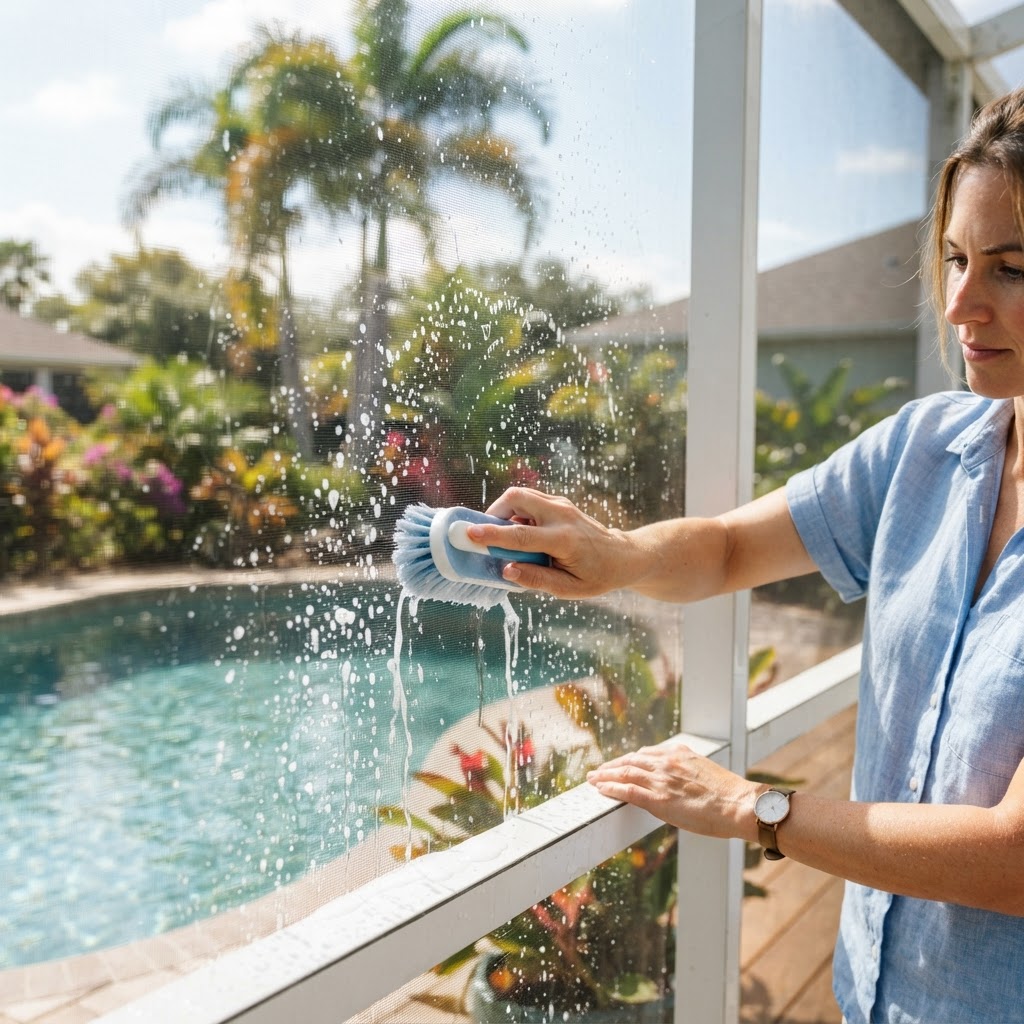
Step 2: Apply soapy water gently. Mix a few drops of mild dish soap into your bucket of warm water. Dip your soft-bristle brush into the solution and gently sweep it across the screen in vertical strokes. Don't press hard — let the soap and water do the work. The goal is to lift contaminants off the mesh, not scrub through it.
Step 3: Work in sections. Clean one panel at a time, working from top to bottom. This prevents soap from drying on the mesh before you can rinse it — which leaves residue and streaks. In South Shore's summer heat, soap dries fast, so keep your sections small and rinse immediately.
Step 4: Rinse thoroughly. Hose down each panel immediately after brushing to remove all soap residue. Soap left on screen mesh attracts dirt and dust — the opposite of what you want. Rinse until the water runs clear.
Step 5: Spot-clean stubborn areas. For mold or mildew stains (common on north-facing panels in July and August), use a solution of mild soap and warm water applied with a microfiber cloth. Gently blot the stained area — don't rub aggressively. If the stain persists, a 50/50 mixture of white vinegar and water can help lift organic discoloration without degrading the mesh fibers.
WHAT NEVER TO DO
Never use a pressure washer on screen mesh. Even a low-pressure setting can stretch, tear, or blow out panels entirely. We've seen enclosures destroyed by a 10-minute pressure washing that a homeowner thought would save time. The repair cost was $2,500.
Never use bleach or bleach-based cleaners. Bleach breaks down fiberglass and synthetic mesh fibers, causing them to become brittle and fail prematurely. It also discolor the mesh and can damage the aluminum frame finish.
Never use stiff or wire brushes. Abrasive bristles tear the mesh and damage the spline channel. Only use soft-bristle brushes designed for delicate surfaces.
Never clean in direct midday sun. In South Shore's summer, the mesh and frame get hot enough that soap dries almost instantly — leaving residue that's harder to remove than the dirt you started with. Clean in the early morning or late afternoon when the enclosure is shaded.
Never use a ladder against the enclosure frame. Aluminum framing is not designed to support a person's weight leaning against it. Use a telescoping brush handle to reach high panels safely.
HOW OFTEN TO CLEAN YOUR SCREEN MESH
For most South Shore homes, a thorough cleaning every 3 to 4 months is ideal. In Apollo Beach and coastal communities where salt air is heavier, consider cleaning every 2 months during summer. During peak pollen season (March through May), a monthly rinse with plain water keeps buildup manageable.
After major storms, inspect and clean your mesh promptly. Storm-driven debris, salt spray, and organic matter can accumulate quickly and cause staining and degradation if left in place.
WHEN TO CALL A PROFESSIONAL
If you notice significant sagging, multiple small holes, or mesh that feels dry and brittle when pressed, it may be time for a professional re-screen rather than a cleaning. These are signs that the mesh has reached end of life and cleaning won't restore it.
Southern Legacy Co. offers free enclosure inspections across South Shore Tampa Bay. We'll walk every panel, document what we find, and give you an honest assessment — whether that's a cleaning recommendation or a re-screen quote. Call (813) 313-8383 to schedule. FL License CBC1269183 — Ruskin, Apollo Beach, Wimauma, Riverview, Parrish, and Sun City Center.